
Queensland Bluegrass

DICHANTHIUM SERICEUM
Warm Season C4 Perennial
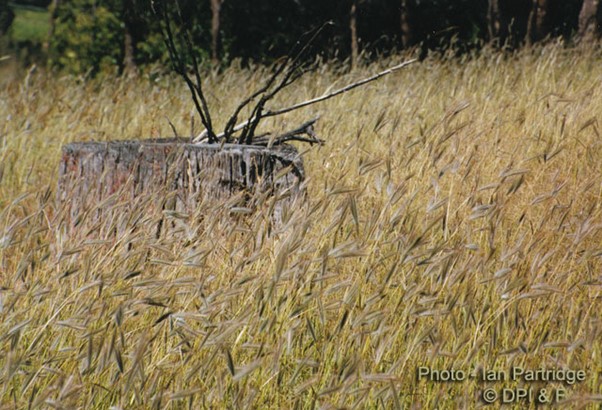
QLD Bluegrass is considered one of the most productive native grasses and is commonly baled for hay. It experiences rapid early spring growth and provides good quality feed when young and green. However, this pasture is early maturing resulting in a low autumn feed value. In high rainfall years it is a high yielding species in terms of biomass production.
Nutritional Characteristics
Crude Protein: 10% at its prime dropping to 4-6% after maturity to become a very low 2% in winter during the dry season
Digestibility: ranges from 38-62%
Grazing Pressure & Palatability
QLD Bluegrass is very palatable to cattle however sheep rarely graze this species. This pasture is most palatable while green and mature and the slender stems are more palatable than those of coarser grasses. Cattle tend to selectively graze this pasture so it is better suited to rotational grazing systems to maintain persistence. QLD Bluegrass decreases under heavy grazing pressure.
Location
QLD Bluegrass is a widespread native pasture in eastern and central Australia. It is easily established on heavy cracking clay soils and prefers deep fertile heavy textured soils of neutral to alkaline PH. It is not suited to acid sandy and other low fertility soils and although it prefers soils that hold a bit of moisture it is quite intolerant of waterlogging. QLD Bluegrass needs a minimum average annual rainfall of 500mm and is not particularly drought tolerant. It experiences its greatest growth during the warm season before it is killed by heavy frosts. You can often find QLD Bluegrass invading improved pastures as soil nitrogen availability decreases and it is quite persistent under these conditions.
Identification
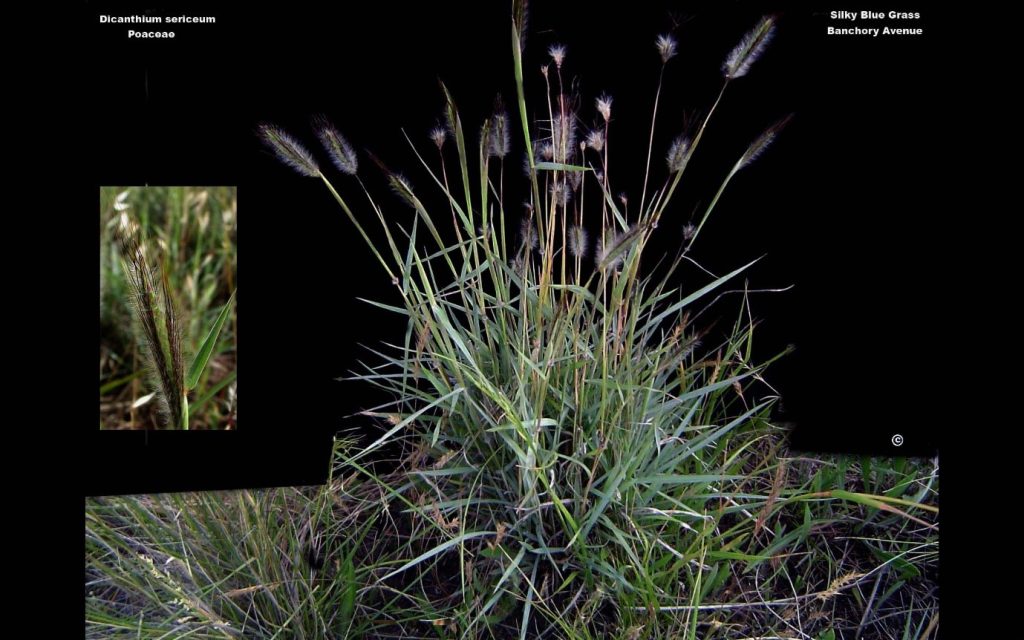
Plant:: Moderate size tufted, erect perennial grass with tufts generally 10-15cm in diameter with a fairly weak root system.
Stems: 30-80cm tall and generally slender. Stems typically smooth, hairless and densely branched at the base and often from the upper nodes as well. Stems are typically 4 noded and have a ring of long erect white hairs.
Leaves: Blue green in colour, leaf blades are flat 8-15cm long and 2-4mm wide typically without hairs. However, some forms can be densely covered in hairs.
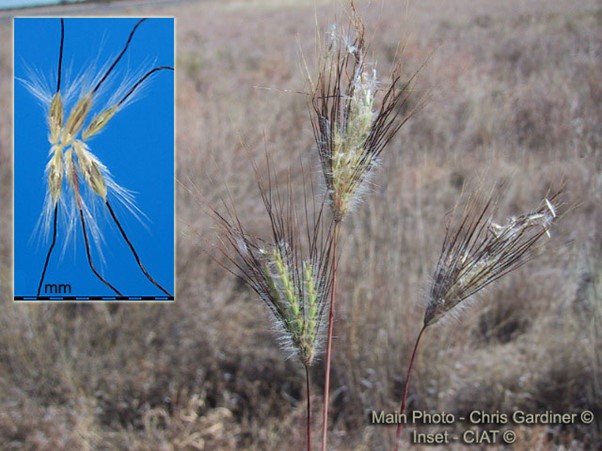
Seed head:: Seed heads have 2-6 stalkless erect branches with a silky hairy appearance. Seed has a brownish, twisted hydroscopic awn about 2.5cm long. Seed heads are typically straw-coloured
— Sara Darrow, Nutritionist
References:
- Grasslands (2020). Silky Blue-grass. Grasslands: Biodiversity of South-Eastern Australia. https://grasslands.ecolinc.vic.edu.au/fieldguide/flora/silky-blue-grass#details
- NSW Government. (2021). Dichanthium sericeum (Queensland bluegrass). Department of Primary Industries. https://www.dpi.nsw.gov.au/agriculture/pastures-and-rangelands/rangelands/publications-and-information/grassedup/species/bluegrass#:~:text=Queensland%20bluegrass%20is%20a%20warm,that%20is%20palatable%20to%20livestock.&text=In%20Queensland%20it%20can%20be,high%20rate%20of%20seedling%20recruitment.
- Scattini, W. (2008). Queensland Bluegrass. Pastures Australia. https://keys.lucidcentral.org/keys/v3/pastures/Html/Queensland_Bluegrass.htm
- Tropical Forages (2021). Dichanthium sericeum. Tropical Forages. https://www.tropicalforages.info/text/entities/dichanthium_sericeum.htm