
Protein Meals
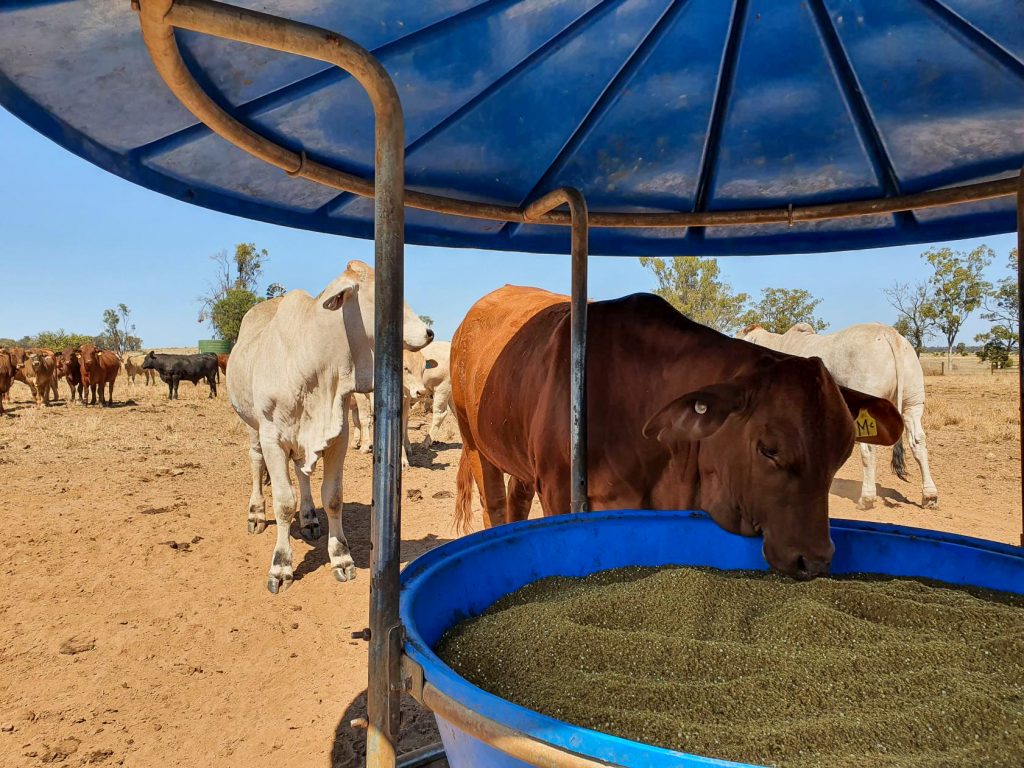
Top Country chooses to use cottonseed meal as it is Australia’s highest quality bypass protein source. Whilst other bypass protein sources are available and comparatively less expensive, they are not of the same quality and do not have the same benefits as cottonseed meal.
Additionally to high quality protein meals, Top Country also encourages low to moderate inclusion of urea in our range of supplements. The reason is that the ability of cattle to utilise urea efficiently relies on there being adequate soluble carbohydrates available to maintain healthy rumen microbial populations. If the rate at which the microbes are accessing the energy from the pasture is slow, as is the case on dry feed that has a low digestibility pasture, the microbial synthesis will be reduced. With fewer microbes to utilise ammonia in the rumen, a large part of the urea that isn’t used by the rumen microbes will be passed to the bloodstream. Whilst some of this will be recycled, the efficiency of urea is far lower on low energy diets than high energy diets, and the risk of urea toxicity is far greater.
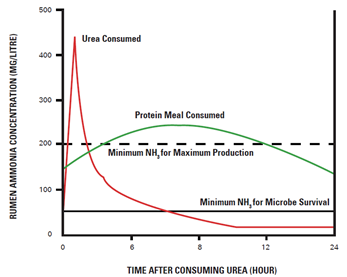
MLA (EDGE network 2007) research has suggested that when cattle are fed very low-quality roughages, a minimum rumen ammonia concentration of 150-200mg NH3/L is needed for maximum roughage intake. With this in mind, we know that it is very difficult to maintain these levels with urea alone. Consequently, supplying high-quality protein meals into your supplementation program will help ensure a constant supply of protein to stimulate rumen fermentation. Roughages are low in nutritional value, protein level, high content of lignocellulose and low digestibility, resulting in low voluntary feed intake. Low-quality roughages can be improved by supplementing true protein sources and non-protein nitrogen (NPN). As the graph below shows, when urea and a source of protected true protein are fed together, they act synergistically to extend the level of nitrogen availability to the microbes, prolonging maximum microbial production and maintaining the population between feeds.
Many protein meals are available in the market, like cottonseed, copra, canola, soybean, macadamia, and palm kernel. Different types of protein sources have individual characteristics allowing them a varying degree of ability to completely bypass the rumen and make it to the small intestine whole. Cottonseed meal and copra are oilseed by-products that have been heat-treated, which protects much of the protein from microbial digestion, meaning they have a large percentage of bypass protein. Another benefit of feeding meals with high ‘bypass’ protein is that the remaining portion of the rumen degradable protein (RDP) breaks down in the rumen very slowly. This allows animals to source small amounts of protein over longer periods for microbial protein production long after urea or fast break down protein have been degraded.
Cottonseed meal and copra meal have a very high ability to bypass the rumen. A complete approach to meeting the animal’s nutritional needs is achieved by combining these meals. In essence, urea supplementation feeds only the rumen microbes and degrades quickly. ‘Bypass’ protein supplementation feeds not only the microbes, degrading slowly in comparison to urea, but also feeds the animal with a high-quality source of protein.
The key objective of Top Country supplements is to support the ideal rumen environment. We use high-quality ingredients like cottonseed meal, copra and canola meal. By providing a steady food source, we are encouraging a healthy rumen microbial population, which increases nutrient intake and rate of digestion. Pasture intake is significantly increased by 20-30%, the major limiting factor to production in the dry season. We also aim to create a shift in the population to a greater proportion of more efficient microbes. This is achieved by incorporating a combination of slow and fast release protein sources (non-protein nitrogen from urea and ammonium sulphate and slow breakdown rumen degradable protein from vegetable protein meals) and adding rumen modifiers. The most commonly used additive is Monensin. The inclusion of Monensin Sodium improves feed conversion efficiency in cattle, allowing them to obtain more energy out of the feed source.
— Tamara Freitas, Nutritionist
References:
McLennan, S., & Dixon, R., 2007. Technical Manual The Nutrition Edge MLA 2007
McLennan, S., Plasto, A. W., Doogan, V. J. & Dillon, R. D. 1998. Whole cottonseed and cottonseed meal supplements for cattle given a hay-based diet. Animal Production in Australia 22, 111-24.