
Take it with a Grain of Salt

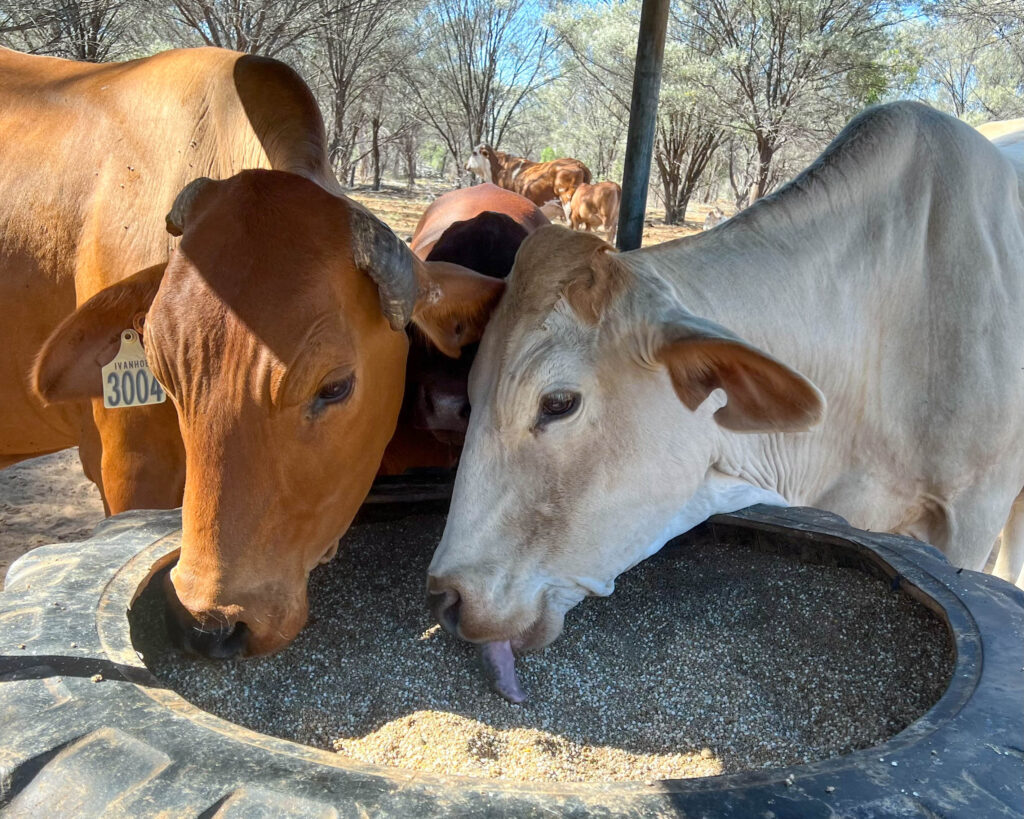
Did you know that salt is comprised of 40% Sodium and 60% Chloride?
Supplementing salt to livestock is economical and time efficient, with animals consuming salt, based on nutritional demand. Salt (NaCl) is an essential element in many plants and in the diet of all animal species. Livestock are often fed salt either in saltlicks, as salt granules or mixed with feed. Salt cannot be made by the body, nor is it stored in the body; therefore, salt intake is required regularly. Salt plays an important role in maintaining osmotic pressure, rumen pH and regulating the volume of fluid in the body. Grazing animals have demonstrated that salt consumptions are often excessive to requirements.
Livestock diets require a salt inclusion, with recommended consumption rates of approximately 50 grams of salt per day. Increased salt inclusions are recommended during stages of heightened activity e.g. lactation or during the summer season where temperatures are extremely hot. In most places around Australia, pastures and grain do not contain enough salt to meet the sodium requirements for animals. The sodium content of pasture depends on plant species, soil type, and the amount of potassium added as fertiliser.
Salt is a major electrolyte that contributes to the maintenance of fluid movement around the body. It is advised that salt should be fed along with loose mineral-vitamins provided near freely available water troughs. Salt and water for cattle go hand-in-hand, especially during times of heat stress and drought. The complications associated with insufficient salt intake include reduced appetite, stunted growth, reduced water intake, reduced production which in turn reduces the profit margin and acute deficiency can lead to death. On the other hand, excessive consumption of salt may result in reduced growth performance parameters, excessive water consumption, abdominal pain, and problems with rumen function. In extreme cases, over consumption may lead to salt poisoning. Although salt poisoning from excessive salt consumption is rare in Northern Australia, correct management practices are encouraged if large salt quantities are offered to livestock. Salt poisoning may occur when cattle consume a salt supplement without free access to good drinking or if salt contaminates the water. It is advised that when supplementing salt, it is mixed throughout the feed or supplement and drinking water is freely offered.
Salt is the most common intake limiter in animal diets. Salt, being readily available, is generally safe, whilst being modified easily in dry lick recipes to achieve a desired intake. Labour costs are therefore lowered because large amounts of supplement can be placed in a self-feeder and left in the paddock. Top Country offer a range of customisable products suitable for seasonal changes and diverse production goals. The salt inclusion in these diets is dependent on the nutritional requirements of the livestock.
The wet season that we would usually be experiencing has been quickly cut short by extreme heat and dry conditions. At Top Country we offer a range of dry lick supplements suitable for all seasons. The Top Season dry lick range is designed as a mid-season supplement or when available feed is limited. This dry lick is high in protein meal and is ideal for supplementing weaners, lactating cows and heifers. The recommended consumption rate for the Top Season dry lick range is between 200g-300g per head per day.

In conclusion, salt has many benefits to animal production and is necessary for maintaining mineral balance in livestock diets. Correct management is needed to ensure that salt is offered correctly to avoid further health issues.
To schedule a property visit or receive expert, one-on-one advice from our Sales Nutritionists, please contact our team on (07) 4622 8330 or enquire here for more information.
Author – Brooke Clinch
Disclaimer:
All animal stockfeed should be fed as part of a nutritious, balanced diet to match the livestock’s specific requirements. Ensure that animals always have plenty of fresh clean water available for drinking. Top Country makes no representations or warranties of any kind, express or implied, as to the suitability of any of the products supplied to the specific requirements of your livestock. It is recommended that you consult your ruminant nutritionist before making any major dietary changes. This product does not contain restricted animal material.
References:
Shepherd, G. 2021. SALT, why is it important in Cattle & Sheep feeding? G Shepherd Animal Advice https://www.gshepherdanimalhealth.co.uk/latest-news/general-news/salt-why-is-it-important-in-cattle-sheep-feeding-#:~:text=So%2C%20it%20is%20important%20to,seek%20it%20out%20if%20needed.
Vitti, P. 2018. Feeding salt to beef cattle is easy. Grainews. https://www.grainews.ca/cattlemans-corner/feeding-salt-to-beef-cattle-is-easy/
Mireia Blanco, Daniel Villalba, Isabel Casasús, Albina Sanz & Javier Álvarez-Rodríguez (2014) High Salt Inclusion Reduces Concentrate Intake Without Major Effects on Renal Function in Young Bulls, Italian Journal of Animal Science, 13:3, DOI: 10.4081/ijas.2014.3207