
Supplementation for Improved Wool Production

Australian wool is regarded among the world’s best. A leader in global wool production, Australia is the world’s largest exporter accounting for 39% of all global wool exports. Wool quality is dependent on length, staple strength, and micron. Wool length and staple strength can be influenced by both the quantity and quality of feed available, and as a result a higher quality wool and larger wool clip can be achieved. With an increasing number of ‘plainer’ bodied merinos within the industry, a decrease in wool clip can often attributed to a reduced skin surface area. Consequentially, each ewe or wether is producing less wool, and profitability is decreasing. Through supplementation, however, wool volume can be increased, and enterprises can boost profitability. Sheep can be supplemented to maximise the rate of growth or production, to rectify dietary deficiency, or to compensate for insufficient or poor-quality pastures.
Nutritional effects on wool growth
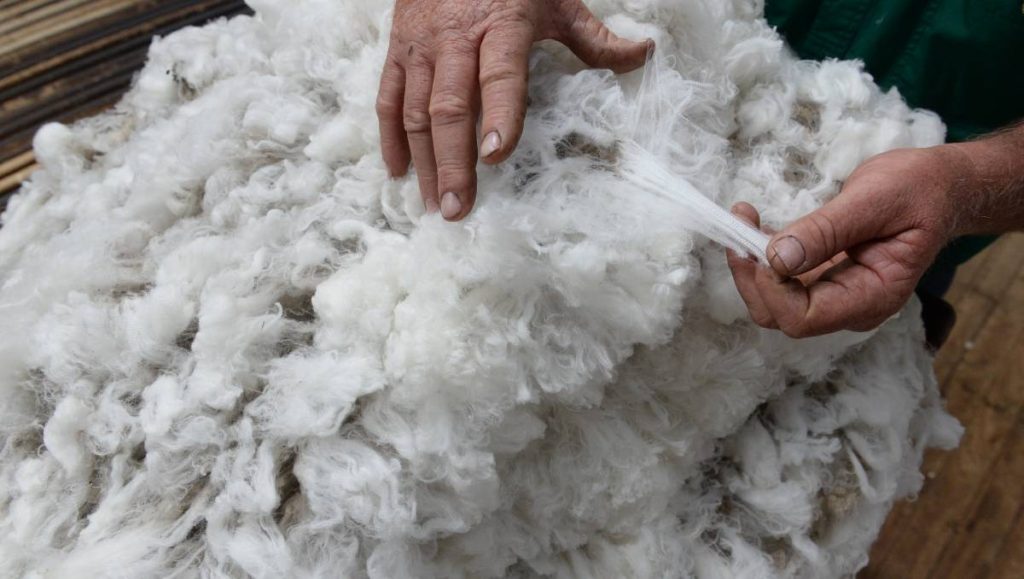
Wool growth is sensitive to nutritional levels with respect to supply of energy and protein to sheep through nutrient intake. For each animal, the rate of growth, morphology and chemical composition of the wool fibres produced is determined by the interaction between several genetically determined follicle characteristics and the relative availability of nutrients to the wool follicles. The availability of nutrients is determined by the quality, quantity and type of nutrients absorbed from the digestive tract, and the competition for nutrients between wool follicles and other body tissues. The amount and composition of the diet eaten, the stage of growth, the reproductive status of the animal, the environmental conditions, and the presence of parasites and disease may all influence the quantity and quality of wool grown.
When the supply of nutrients is limiting, reductions in wool growth occur at a follicular level in response to declines in cell division in the follicle bulb (hair root). The process of follicle ‘shut down’ is when environmental stress, particularly nutritional stress is reflected as weakness in the wool (wool break). The lowered cell division results in thinner wool that increase the chance of weak spots and decreases staple strength. Many studies have been conducted on the supplementation of grazing sheep showing the significant increase in staple strength.
Lambing ewes suffer more penalties in wool classing and processing, compared to dry sheep. The decline in wool production during pregnancy and lactation is observed due to the increased competition for nutrients and an inefficiency of use of those nutrients for wool growth. Despite similar diets, liveweight and changes in liveweight, there has been a reported 40% reduction in wool growth for ewes during pregnancy and lactation compared to dry sheep. The effects of pregnancy and lactation on wool production and staple strength are compounded when feed availability and quality is limiting.
Benefits of Protein supplementation
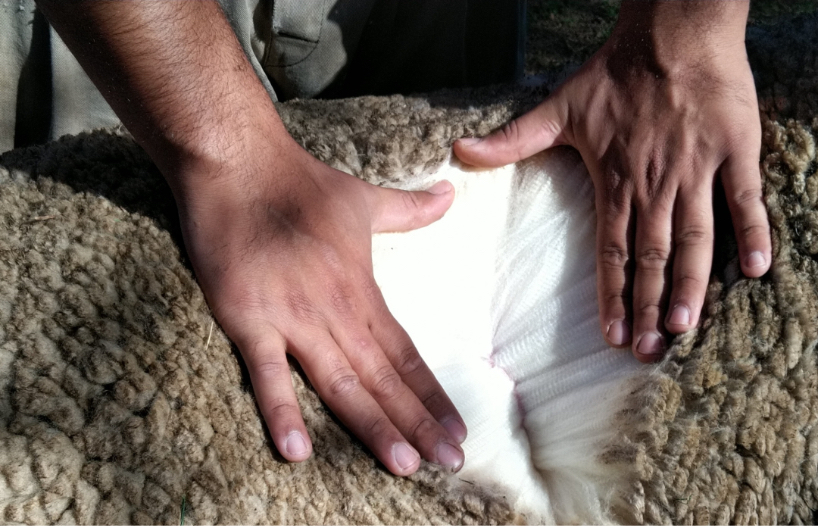
As wool growth is largely a function of the quality and quantity of absorbed dietary protein, it is important to investigate how different protein sources impact and promote wool growth. The price penalties associated with ‘tender wool’, caused by excessive thinning of wool during times of the year when herbage (protein supply) is limited, result in producers needing to know the relative quality of supplementary feeds in terms of nutrient ability to promote wool growth. While cereal grains and lupins are considered superior and supplemented for wool growth due to the high protein content, this recommendation lacks support through experimental evidence. Most evidence supports the use of protein meals; cotton seed meal, full fat soya meal, canola, and other vegetable proteins as quality sources of protein and amino acids that promotes wool growth. Amino acid composition of metabolisable protein (MP) varies widely from that of microbial protein as dietary protein or amino acids are naturally or artificially protected against rumen degradation.
White et al (2000), conducted research on different protein sources and its effect on wool growth and microbial protein synthesis in merino wethers. Each of White’s diets were formulated to meet Protein and ME standards of 2.4% CP and 9.8 ME MJ/kg DM however using different protein sources of: Canola meal, Oats + urea, field/white lupins or Narrowleaf lupins + urea. White et al. (2000) found that the wethers fed canola meal had an increased wool growth of 37% over the sheep on oats and 73% greater than sheep on lupins. Protected canola meal increased clean wool yield (clean wool expressed as percentage of greasy wool) relative to other diets (P<0.01); the yield was 78.8±0.9% for the canola meal v. a mean on 71.4±0.9% for the other diets.
Benefits of sulphur supplementation
Sulphur is one of the major components of the keratin proteins that are part of the foundation of wool fibres. Keratin is composed of 20 amino acids with sulphur content varying from 2.7-5.4% of fibre weight. These sulphur amino acids (methionine, cysteine and cystine) influence the rate of fibre growth and fibre quality. Ruminants can obtain sulphur from both organic and inorganic sources and as a result sulphur deficiencies are easier to rectify. The first research on inorganic sulphur supplementation was conducted in 1953 by Starks et al. Starks observed that nitrogen (protein) retention was increased when dietary sulphur was increased. Qi et al (1993) and Li et al (2013), both concluded that sulphur supplementation increases wool growth and quality and Williams et al (1972) reported that despite flocks with a genetic predisposition for increased fleece weight and high wool production, sulphur, and sulphur amino acid deficiency, limited fibre growth. Sulphur supplementation can be easily achieved using dry lick supplements, where low and consistent consumption provide a constant sulphur source utilised by rumen microbes and absorbed through the intestine.
While sulphur supplements in wool producing operations are essential for wool quality, they also have an influence of feed intake and digestibility. Improvements in rumen bacteria and protozoal numbers have been seen when sulphur supplements have been introduced in the diets of sheep. This increase in rumen microbes and protozoa results in the improvement of ammonia (nitrogen) utilisation and increases the outflow of microbial protein from the rumen. With higher levels of pasture digesting bacteria, sheep can digest cellulose at a higher rate, increasing the rumen passage rate and increasing intake. Increased intake directly impacts weight gain, increasing weight gain can result in earlier turn off of lambs and increase productivity.
For further information on Top Country’s products or any advice from our nutritionists please don’t hesitate to contact us.
— Philippa McKee, nutritionist
References
Graham, V. (2020). Wool prices forecast to make steady gains over next five years. Farm Online National. https://www.farmonline.com.au/story/6656507/abares-tips-steady-rise-for-wool-prices-and-production/
Li, L., Silveira, C. I., Nolan, J. V., Godwin, I. R., Leng, R. A., & Hegarty, R. S. (2013). Effect of added dietary nitrate and elemental sulfur on wool growth and methane emission of Merino lambs. Animal Production Science, 53(11), 1195-1201.
Monexpert. (2022). Insulation under the magnifying glass: sheep wool, all about this natural insulation. Monexpert. https://monexpert-renovation-energie.fr/isolation/laine-de-mouton-isolant-naturel
Qi, K., Owens, F. N., & Lu, C. D. (1994). Effects of sulfur deficiency on performance of fiber-producing sheep and goats: A review. Small Ruminant Research, 14(2), 115-126.
Starks et al. (1953). The Utilization of Feed Nitrogen by Lambs as Affected by Elemental Sulfur. Journal of Animal Science, 12(3), 480–491,
White, C. L., Young, P., Phillips, N., & Rodehutscord, M. (2000). The effect of dietary protein source and protected methionine (Lactet) on wool growth and microbial protein synthesis in Merino wethers. Australian Journal of Agricultural Research, 51(2), 173-184.
Williams, A. J., Robards, G. E., & Saville, D. G. (1972). Metabolism of Cystine by Merino Sheep Genetically Different in Wool Production II. the Responses in Wool Growth to Abomasal Infusions of L-Cystine or Dl-Methionine. Australian Journal of biological sciences, 25(6), 1269-1276.