
Prussic Acid and Sulphur Supplementation
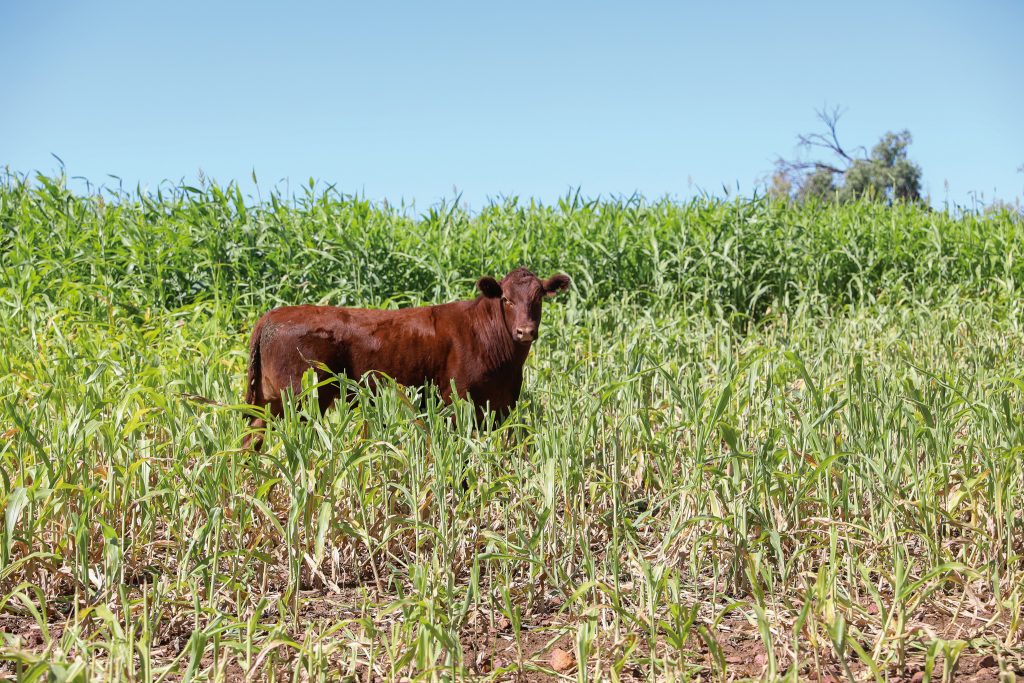
As summer creeps closer and forage sorghum, silk sorghum or Sudan grasses are planted and growing, there is one major risk to animal health and production when using these plants for grazing. Prussic acid, also known as Hydrocyanic acid, is a potent, rapidly acting poison absorbed and transported through the bloodstream. It acts as an oxygen inhibitor for cells, to the effect that animals die of asphyxia (cell suffocation) when consuming plants with increased amounts of prussic acid.
Sorghum and Sudan grasses, as well as sorghum/Sudan grass hybrids, are types of cyanogenic plants. Cyanogenic plants produce cyanogenetic glucosides during their growing stages which then, under the right conditions, breakdown to produce prussic acid. Under normal growing conditions, the intact glucoside occurs in the plants at lower levels and can be managed by the animal. It is eliminated through detoxification before accumulation in the body and concentrations become harmful. Prussic acid becomes a problem when growing conditions rapidly change. Climate, fertility, stage of growth and anything that could hinder plant growth can cause an increase in the concentration of the cyanogenetic glucosides present in the plant. Cyanogenetic glucosides are not toxic as a whole sugar, however, when hydrolysed following tissue damage, hydrocyanic acid (Prussic acid) is produced and is responsible for chronic toxicity.
Sulphur plays a pivotal role in the detoxification of prussic acid. As such there is an increased need for supplemental sulphur in the diet when grazing cattle on forage sorghum crops. Not only does supplemental sulphur help to detoxify prussic acid, but there are also other advantages to supply sulphur when grazing sorghum, Sudan grasses or other cyanogenic plants. Research has shown that cattle grazing cyanogenic plants with supplemental sulphur have an increase in nitrogen utilisation resulting in increase in feed protein synthesis. Supplemental sulphur has seen to increase Dry Matter digestibility and cellulolytic bacteria which could increase fibre digestibility, digestibility of cellulose and lignocellulose, feed intake and feed utilisation.
Top Country has a specifically designed dry lick for grasses and forage crops that have a high risk of increased amounts of prussic acid. Top Forage is a mineral supplement designed for livestock grazing Sorghum, Sudan grasses and related species, including Silk Sorghum. This range contains high levels of Sulphur, which is used to detoxify prussic acid, increasing intakes of the crop. With the increased intakes and a balance of minerals provided by the supplement, higher productivity can be achieved. This product contains protein meals and no urea. Best cost returns are gained when cattle consume 300g/head/day.
— Pip McKee, Nutritionist