
Pregnancy Toxaemia in Ewes
Pregnancy toxaemia is a metabolic disorder resulting in the incapacity for the animal to maintain an adequate energy balance. It occurs when drastically low levels of glucose in the blood damage the brain and result in dehydration, kidney failure and potentially death. Inadequate nutrition is the primary cause of pregnancy toxaemia during late gestation because of insufficient energy density in available feed and decreased rumen capacity due to foetal growth. In northern Australia during the drier winter months, when grasses have poor nutritional value and cannot fulfill daily energy requirements, pregnancy toxaemia can pose a risk to a producer’s profitability. Pregnancy toxaemia can affect cattle, sheep and goats, however twinning ewes and nannies are the most effected due to the increased energy (glucose) requirements on the female during the last 6 weeks of pregnancy. The level of glucose in the blood is directly related to the quantity and quality of feed being digested.
Glucose and Ketones
Glucose is the main energy source for pregnancy ewes and nannies. In late pregnancy energy requirements increase significantly due to rapidly growing foetuses and udder development. At this time ewes and nannies grazed on pastures struggle to consume enough feed to adequately supply the energy levels needed to sustain weight and the foetus, at this point without a supplementary energy source the ewe or nanny must source glucose from within the body.
During this time of low energy input, fat is used as a major maternal energy source, resulting in the production of ketones. Ketones are a by-product when the liver metabolises glucose from fat through the process of gluconeogenesis. Each foetus requires 30-40g of glucose/day in late gestation, this represents a significant proportion of the female’s glucose production and if preferentially directed to sustaining the foetus.
Causes of Pregnancy Toxaemia
Causes of pregnancy toxaemia fall into three general categories, stress and fasting, over-fat ewes and inadequate pasture.
Stress and Fasting
Pregnancy toxaemia can be triggered by stress resulting from unfamiliar locations, transport, cold wet weather, internal parasites, and foot abscess and by fasting due to extended periods of handling (ie, shearing). On its own, stress generally does not result in pregnancy toxaemia, however in conjunction with prolonged under-nutrition and elevated ketones within the body, it can be enough to ‘tip the balance’ and causing pregnancy toxaemia in ewes during late pregnancy.
Over-fat Ewes/Nannies
Over fat ewes are at higher risk of pregnancy toxaemia due to the lower consumption of feed compared to their thinner counterparts. This scenario often occurs with good summer rain with an autumn finish where ewes become fat over summer and sustain weight through autumn and early winter. Ewes with a body condition score of 5, can lose weight at a rate of 169g/day.
Inadequate Pasture
The primary source of pregnancy toxaemia is poor quality pastures not meeting the nutritional energy requirements of the females. Pasture quantity and quality both effect the available energy for pregnant ewes.
Pasture Quantity
When pasture biomass falls below 1000 kg/DM/ha of green pasture, twin bearing ewes in late pregnancy will start to mobilise increasing amounts of fat. At 500kg/DM/ha the level of weight loss will be moderate to high, and supplementation will be required to lower the risk of pregnancy toxaemia and retain fat for lactation.
Pasture Quality
Although paddocks may have a bulk of dry standing feed and pasture biomass is high, as the pastures seed and dry off the digestibility and available energy and protein within the pasture decreases and a reduced feed intake.
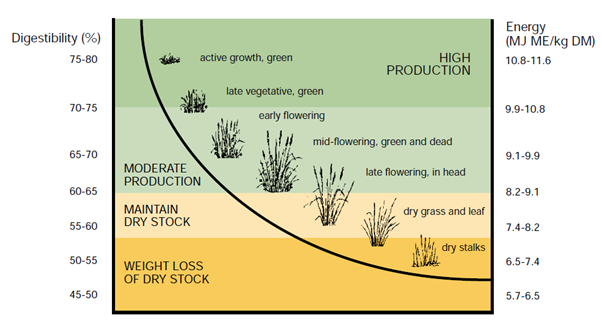
At a digestibility level of 60% (dead grass and leaf) or below, ewes will require a supplementary energy and protein feed to maintain body condition score and adequate fat reserves for lactation. It is almost inevitable that twin bearing ewes in late pregnancy and early lactation will lose maternal body weight, however with the use of body condition scoring and supplementation, weight loss can be minimised, and the risk of pregnancy toxaemia be eliminated. Targeted management practices through pregnancy scanning for single or twin baring ewes is an important step in prevention of pregnancy toxaemia. Twin and single bearing ewes have differing energy requirements and therefore twin bearing ewes will need increased supplementation.
— Philippa McKee, Nutritionist