
Pimelea – What are your options?
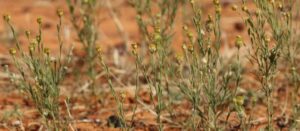
Pimelea Image credit - Bushdust and Mulga Photography
An article by Top Country Animal nutritionist, Nicholas Loughnan.
With good rain falling in the last few weeks of Autumn, the predicted drop in temperature in the coming weeks means conditions are ideal for the growth of Pimelea through the Winter.
What is Pimelea?
Pimelea is a native plant that has the potential to cause pimelea toxicity, also known as St George disease.
Symptoms of this condition include:
- Fluid build-up around the brisket and neck
- Loss of condition
- Loss of appetite
- Diarrhoea
- Increased respiration rate (panting)
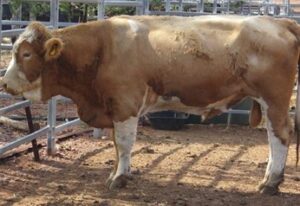
Figure 4 - Clinical signs of pimelea toxicity (Nason 2017)
The disease is caused by the simplexin toxin, which constricts blood vessels and makes it hard for blood to pump to the heart and lungs. This causes increased blood pressure which forces fluid out of blood vessels and into the surrounding tissues.
When and where is it a problem?
Ideal conditions for pimelea growth typically occur during a wet winter, especially when there is a lack of summer and spring rain to stimulate good grass growth. Cattle typically won’t select pimelea when it is green and growing believed to be due to the odour the plant emits.
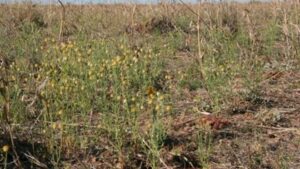
Figure 1 - Pimelea simplex in a grass pasture (Nason 2017)
Because of this, we tend to see problems when the plant has dried off in Spring or early Summer. At this point, cattle either select the plant because there is too little grass available or they accidentally consume it among tufts of dry grass. Either way, this is when cattle are at the highest risk of consuming the plant and showing signs of disease.
Pimelea is generally considered a low succession plant, meaning that it establishes more easily on bare ground with low soil fertility. This means that overgrazed, burnt and sandy areas of land are ideal for pimelea to establish. Pimelea also tends to establish better in soils that are redder, possibly because the hard seed coat can break down in these more acidic soils.
What can we do about it?
The University of Queensland conducted a research trial a few years ago where steers affected by pimelea toxicity were treated with different adsorbents including bentonite, biochar, elitox and a rumen fluid inoculum. This trial showed that steers consuming a bentonite adsorbent together with pimelea showed lesser rates of decline for body weight and four hematological parameters (Hungerford et al 2024).
Bentonite is a clay that is made up of extremely small particles, which means it has a very large surface area to bind to toxins and other charged particles.
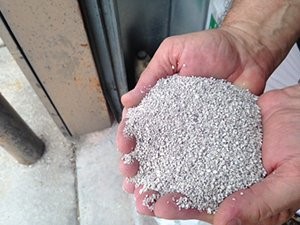
Figure 2 - Granular bentonite clay
Top Country can add bentonite into our range of dry lick rations for cattle that are at risk of consuming pimelea. The target intake of bentonite is around 100g per head. We can get this intake by increasing the recommended intake of the ration to 400g instead of 300g. Therefore, when we add 25% bentonite to the lick and decrease the other ingredients by 25%, we can still get the same amount of nutrients we would from a normal 300g intake lick. This means we can maintain high production while hopefully binding some of the harmful simplexin toxin.
We also have a product called Top Bentonite, which is for cattle that are likely to eat large amounts of pimelea. It contains predominantly bentonite and some grain and protein meal to increase palatability. There is currently no proven cure for symptoms of pimelea toxicity so it is extremely important to supplement a bentonite ration before or during risky grazing periods.
There is good evidence to suggest that cattle can develop some resistance against the effects of the toxin over time through adaptation of the rumen microbiome (Fletcher 2014). Rumen microorganisms are known to detoxify a wide range of plant toxins. These microorganisms also require protein and energy from the diet to reproduce and multiply quickly. Our normal high protein dry licks and production rations can do this by providing a slow-release protein and energy source, which increases the number of these microbes that can break down the simplexin toxin.
Feel free to give the office a call on 07 46 228 330 if you would like to discuss a supplementation program for cattle grazing on pimelea affected pastures!
COPY PHOTO: Bulldust and Mulga Photography
References
Fletcher, M.T.; Chow, S.; Ossedryver, S.M. Effect of increasing low-dose simplexin exposure in cattle consuming Pimelea trichostachya. J. Agric. Food. Chem. 2014, 62, 7402–7406
Natasha L. Hungerford, Diane Ouwerkerk, Rosalind A. Gilbert, Zhi Hung Loh, Russell J. Gordon, Luis F.P. Silva, and Mary T. Fletcher
Journal of Agricultural and Food Chemistry 2024 72 (28), 15572-15585
DOI: 10.1021/acs.jafc.4c02082