
Benefits of Early Weaning Beef Cattle
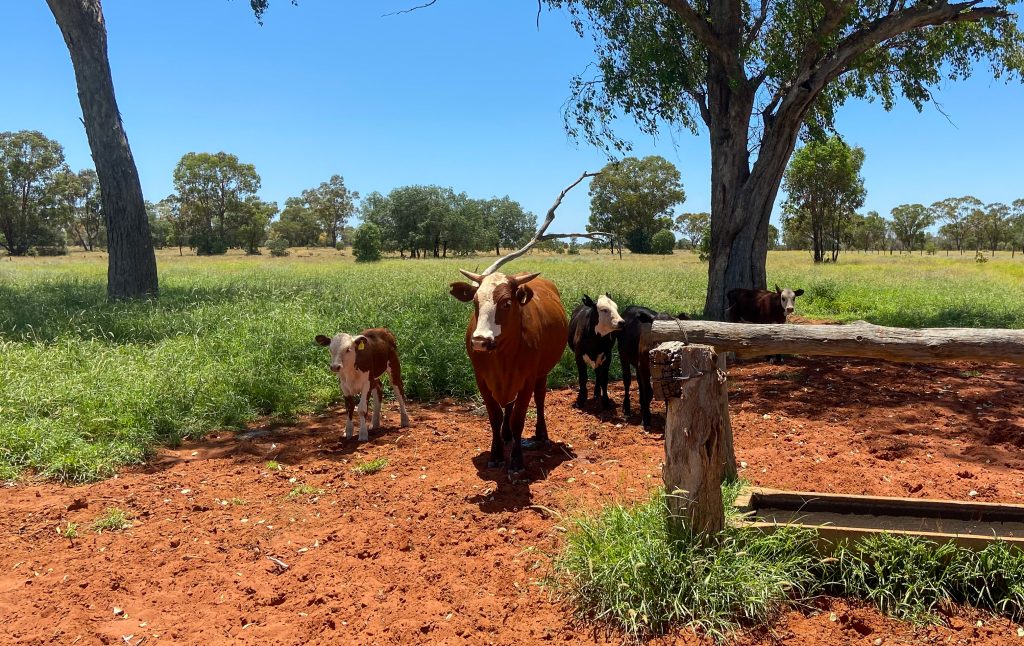
Weaning is potentially one of the most stressful, and therefore one of the most important, procedures in the production cycle of beef cattle, sheep and goats. Considering that it is logical to wean earlier (or more accurately, at lower bodyweight) under drought or conditions of feed shortage, it is therefore logical to wean calves earlier regardless of seasonal conditions to reduce total feed requirements and to allocate more feed resources to growing stock than to cows.
When very young calves are taken off the cow, it is the stage of the digestive tract development which governs how calves should be weaned at different ages. Typically, early weaned calves will not have a fully functioning rumen, and as such their digestive track operates largely like a monogastric animal, depending mainly on the abomasum, or fourth stomach. As the calf starts to forage, during the first few months, its rumen gradually grows and develops. The rate of development and timing will vary according to factors such as the nutrition, condition and milk supply of the cow, and the available feed in the paddock. Typically, calves may be functioning as normal ruminant animals between three and six months of age. Therefore, once the calf is old enough to be weaned from milk, a grain-based diet which can be readily digested should be provided as the main source of nutrition, as should hay/roughage to ensure the rumen continues to develop normally. Since the rumen is less developed in young weaners, it has minimal ability to process urea or to break down the gossypol in whole cottonseed. Therefore, these are not recommended for very young weaners.
If there is one advantage under drought conditions, it’s that calves tend to have more developed rumens because they are forced to start foraging younger in life (due to lower milk supply). The feed quality is also poorer, which in turn provides the physical stimulation and bulk to help the rumen to develop.
The development window for rumen production closes at roughly 16 weeks of age. By including a well-structured weaning program that includes correct protein, fibre and starch content can impact the lining development of the rumen significantly. By improving the development of the rumen, it is more effective at absorbing nutrients for the rest of their lives.
Leaving the calf on its mother during the dry season will enable the calf to grow a bit faster as it gets a good balance of nutrients from the milk. The mother, however, is putting all of her nutrient resources into producing enough milk for the rapidly growing calf. As a result, she begins to lose weight and her condition will decline to the point where she is unable to conceive again. If the cows had become extremely poor, they will need a higher level of feeding for a period of time to pick up weight and condition to an acceptable level.
It is more efficient to feed a calf directly, than to feed a cow to feed a heavy calf with milk. The feed requirement of a dry cow is often only 50-65% of a cow with calf at foot. The major advantages to early weaning is having the ability to run more cows and achieve optimal reproductive performance, or to allow for opportunistic trading. Typically, it is easier and cheaper to feed a young calf (weaner) and its mother separately, than it is to feed a lactating cow/calf unit. Removing the need to produce milk for its calf in the early dry season is equivalent to giving the cow a supplement of up to 2kg of grain a day.
The table below shows the relationship between cow body condition and likely pregnancy rates of lactating cows at the end of the dry season.
| Body Condition Score (1-5 scale) | Description | Likely pregnancy rate in the growing season |
| 1 | Poor | Up to 25% |
| 2 | Backward | 50% |
| 3 | Moderate (store) | 70% |
| 4 | Good | 85% |
| 5 | Fat | 95% |
We have our two main cattle weaning rations at Top Country which are the Top Early Wean 100 that is specifically designed for calves that are between 50-100kgs and the Top Wean 200 which is designed for calves 150kgs and over. Both rations have the effective amount of fibre, nutrients and energy for each specific weight range.
If you would like to discuss weaning options further for either calves or sheep/goats, please do not hesitate to contact one of our Top Country nutritionists.
– Kelsey Smith, Nutritionist
References
Future Beef. (2012). Weaner management in northern beef herds. Future Beef. https://futurebeef.com.au/wp-content/uploads/Weaner-management-in-northern-beef-herds.pdf