
Mineral Supplementation on Winter Cereal Crops
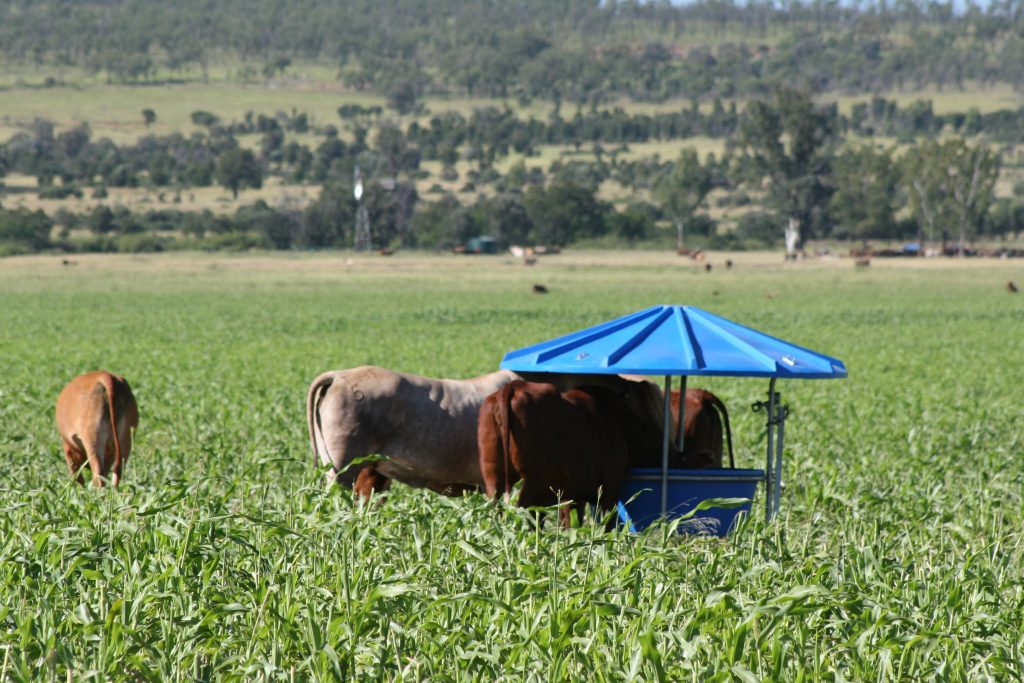
Grazing winter cereal crops, such as oats, is a popular option for graziers at this time of year. The crops are a highly palatable feed source, providing livestock with good quality feed to fill a feed gap often experienced at this time of year with tropical pasture species. Winter cereal crops can have an ME (energy) ranging from 8-14 (MJME/kg DM), crude protein (CP) of 14-32% and dry matter (DM) ranging from 15-32%. Because of the high quality of these winter cereal, weight gains of more than 1kg per day are possible.1,5
Whilst these crops offer a high quality, palatable source of feed, there are some considerations to be made in order to get the most out of them, including mineral supplementation.
Providing the oats crops gets the rainfall it requires it can have a higher winter growth rate than tropical pasture species which have long since surpassed their green date. They also have a higher carrying capacity than pastures at this time of year. However, they can be deficient in critical minerals, particularly phosphorus, calcium and magnesium.
What is the role of these minerals, and why should I supplement them?
Minerals play vital roles in the physiological processes of the body, and whilst each mineral plays its own important role, they are also often linked to other minerals, so a balanced diet is essential in any livestock grazing system.
In many parts of QLD, Phosphorus is most often the most limiting mineral to production. Cattle need phosphorus for almost every vital function of the body6. The primary effect of phosphorus deficiency in cattle is to depress forage intake so that the cattle can not eat enough to meet their energy requirements and consequently, productivity is reduced6. The common signs of phosphorus deficient cattle outside of weight loss and reduced appetite is bone chewing, while severely deficient cattle will often break bones.
Whilst most people are aware of the role calcium plays in bone formulation and milk production, it is important to note that it is also involved in a wide range of physiological processes in the body. Calcium is important for the correct function of the both the nervous and muscular systems, as well as hormone secretion and enzyme activity. A deficiency in calcium can result in milk fever in heavily pregnant or lactating livestock, particularly ewes, but growing and dry stock can also be affected4.
Magnesium is essential to metabolise carbohydrates, lipids and proteins. It is also essential for brain function. Cattle that are deficient in magnesium will have a reduced feed intake2, resulting in possible weight loss, as well as reduced milk production. A severe deficiency can result in a condition known as ‘Grass Tetany’ or hypomagnesia. It is most common in older, lactating cows, but can also be seen in other classes of livestock3.
The high amounts of potassium that can also be found in these cereal crops should also be considered. Potassium inhibits the uptake of calcium and magnesium making it even more likely that a deficiency in these minerals will occur when grazing cereal crops.
Supplementing livestock with a dry lick specifically formulated to address these mineral deficiencies will enable cattle to achieve best possible averaged average daily weight gains. In the 2006 Grain & Graze project, a combined Magnesium, Calcium and salt supplement led to a 54% increase in lamb liveweight gain, compared with un-supplemented lambs. Other studies have shown that in both sheep and cattle, mineral supplementation has resulted in increases in liveweight gain of 15-60%.
As with any supplementation program it is important to identify the most limiting factor to production and supplement for that. In the case of winter cereal crops, minerals are most often the most limiting factor to production and by introducing an effective mineral supplementation program you will be more likely to see increased average daily weight gains.
Top Crop is a dry lick designed specifically for ruminants grazing green crops or lush green pastures. This product addresses the mineral deficiencies discussed above. It is high in both phosphorus and calcium, as well as having increased levels of magnesium and sulphur. It is recommended that livestock are started on this dry lick prior to being moved onto the oats crop for best results.
What other factors should I consider when grazing winter cereal crops?
There are several other factors that should be considered when grazing ruminant livestock on cereal crops. These include some management considerations such as vaccinating for clostridial diseases.
Enterotoxemia or ‘pulpy kidney’ is a clostridial disease that the MLA identifies as likely to occur on lush green pastures, heavy grain feeding and a sudden change in feeding7. It is therefore recommended that animals have been vaccinated with either a 5in1 or 7in1 vaccine prior to commencing grazing on an oats or other cereal crop.
— Amanda McCutcheon, Nutritionist
References/Resources
- Bell, Lindsay (2012), Mineral Supplements needed when grazing cereals, CSIRO mineral-supplements-needed-when-grazing-cereals
- Hamlyn-Hill (2011), Minerals and Vitamins, Future Beef minerals-and-vitamins
- Elliott, M. (2009). Grass tetany in cattle. NSW DPI Primefact 240. Grass tetany in cattle (nsw.gov.au)
- Blackwood, I. (2009). Assessing stockfeed additives and mineral supplements. NSW DPI Primefact 656. Assessing stock feed additives and mineral supplements (nsw.gov.au)
- Hopkins, Kylie (2018), Grazing weaners on Oats, Future Beef. The-effect-of-compensatory-gain-on-productivity-and-profitability-weaners-grazing-oats.pdf
- Partridge, Ian (2012), Phosphorus management of beef cattle in northern Australia, MLA. phosphorus-nutrition-of-cattle-in-northern-australia
- https://www.mla.com.au/research-and-development/animal-health-welfare-and-biosecurity/diseases/infectious/clostridial-diseases/#